
In California development, parking is often treated as a simple line item. A required number of stalls multiplied by a rough cost per space. On paper it appears straightforward. In practice, parking can quietly become one of the most influential variables in a project’s financial performance.
What many developers eventually discover is that “California style” parking carries hidden costs that extend far beyond the price of pouring concrete or building a structured garage. The real impact shows up in design constraints, entitlement timelines, land utilization, and long term asset flexibility. When parking is approached strategically rather than mechanically, it can significantly improve the economics of a project.
The True Cost Per Stall
Most developers know the general benchmarks. Surface parking may range from $5,000 to $10,000 per stall depending on grading and drainage. Structured parking in California can easily reach $45,000 to $70,000 per stall. Underground parking can climb past $80,000 or more once excavation, waterproofing, ventilation, and seismic considerations enter the equation.
Yet the construction cost is only part of the story.
Parking often consumes the most valuable square footage on a site. A structured stall typically requires around 325 square feet when circulation, ramps, and columns are factored in. That space could otherwise be used for leasable square footage, additional units, or amenities that drive rent premiums.
For many projects, parking quietly becomes the largest non revenue producing component of the entire development.
The Design Trap
California developers are uniquely familiar with the design gymnastics that parking requirements can create. A project that works perfectly at one parking ratio may become completely inefficient at another.
A small shift in required stalls can trigger cascading design changes. An additional parking level may suddenly be necessary. Ceiling heights may change. Structural systems may become more complicated. Ramp layouts may reduce ground floor retail visibility.
These adjustments can easily add millions in cost while simultaneously reducing usable square footage.
The irony is that the parking ratio itself is often based on older assumptions about vehicle ownership and commuting patterns. In urban and transit oriented areas across California, many tenants are using fewer vehicles than expected. Ride share, hybrid work schedules, and improved transit access are slowly shifting the demand curve.
Developers who design strictly to code minimums without considering evolving usage patterns can find themselves overbuilding parking at enormous expense.
The Automation Opportunity
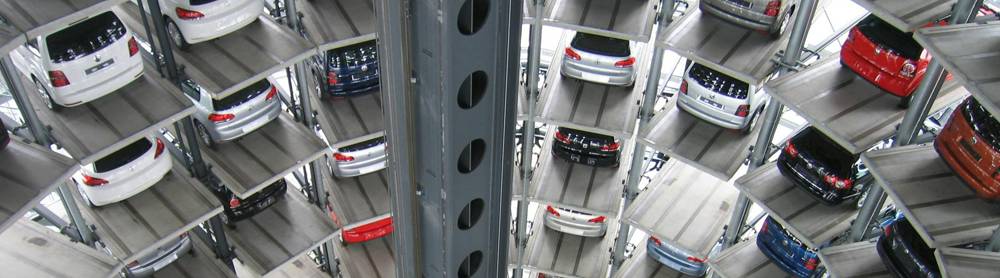
One solution that is gaining traction in dense California markets is automated parking. Mechanical and robotic parking systems can reduce the space required per stall while eliminating many of the inefficiencies associated with ramps and circulation lanes.
Automated systems are not inexpensive, but when structured parking costs approach $60,000 per stall, the economics begin to make sense. By increasing stall density and reducing the overall parking footprint, developers can often reclaim significant square footage for revenue generating uses.
In high land cost environments such as Los Angeles, San Francisco, and San Diego, even modest gains in leasable area can dramatically shift project returns.
Of course, automation must be evaluated carefully. Maintenance requirements, user experience, and operational reliability all matter. But in the right context, it can transform parking from a design limitation into a strategic advantage.
Designing for Repurposing
Perhaps the most overlooked strategy in parking design is future adaptability.
Parking demand is not static. Electric vehicles, autonomous driving technology, and evolving urban mobility patterns are likely to change how parking is used over the next twenty years. Developers who build rigid parking structures today may eventually find themselves holding large volumes of obsolete space.
Forward thinking projects are beginning to address this risk by designing parking structures that can be converted to alternative uses in the future.
This might include flat floor plates instead of sloped decks, higher ceiling clearances, and structural layouts that allow parking areas to transition into office, residential, or storage space. Some projects even design utility infrastructure with future conversion in mind.
While these design choices can add modest upfront costs, they preserve long term flexibility and protect the asset from future demand shifts.
In markets where land values continue to rise, the ability to repurpose a garage into income producing square footage can dramatically increase long term asset value.
Parking and Deal Performance
When developers look back at projects that underperformed initial projections, parking often plays a quiet role in the outcome.
A garage that costs several million dollars more than expected can compress margins quickly. Additional construction complexity can extend project timelines. Excess parking can reduce the overall efficiency of the site.
Conversely, projects that approach parking strategically often unlock hidden value.
Reducing stall counts through smart entitlement strategies can improve land utilization. Automation can reclaim square footage. Convertible parking structures can future proof an asset.
Each of these decisions compounds over the life of a project.
A Strategic Approach to Parking
For California developers, parking should be treated less like a compliance requirement and more like a financial lever. Early design decisions around parking can influence everything from project feasibility to long term asset performance.
The most successful projects tend to approach parking with three guiding questions.
First, what level of parking demand will truly exist once the project stabilizes?
Second, how can the design minimize non productive square footage?
Third, how can the parking structure remain adaptable if mobility patterns change over time?
Projects that answer these questions early in the development process tend to avoid costly redesigns later. More importantly, they position the asset to perform well not just at completion, but throughout its lifecycle.
In a market as competitive and capital intensive as California, small design decisions can create large financial consequences. Parking may seem like a technical requirement, but in reality it is one of the most powerful tools available for shaping the economics of a development.
Handled thoughtfully, it can turn an average project into a highly efficient one. And in many cases, it can be the difference between a deal that simply works and one that performs exceptionally well.